


Supporting children to understand and care for biodiversity starts with experience, awe, curiosity, and connection.
We have brought together biodiversity educational resources developed in the Horizon Europe PLANET4B project, alongside selected external resources suitable for primary education, to help teachers introduce biodiversity in ways that are age-appropriate, engaging and support learning.
These resources combine storytelling, outdoor learning, gardening, play, and reflection, helping younger children explore how nature and biodiversity support life and how they can care for the natural world around them.
Educational resources we recommend
PLANET4B Primary lesson plans on biodiversity
Developed and tested by PLANET4B partner ESSRG, these two lesson plans are for children aged 11-13 years old, and for 13–16-year-olds. They offer clear learning objectives, step-by-step guidance, and flexible activities about biodiversity that fit easily into school schedules.
The lesson plans are available to download in English and Hungarian.
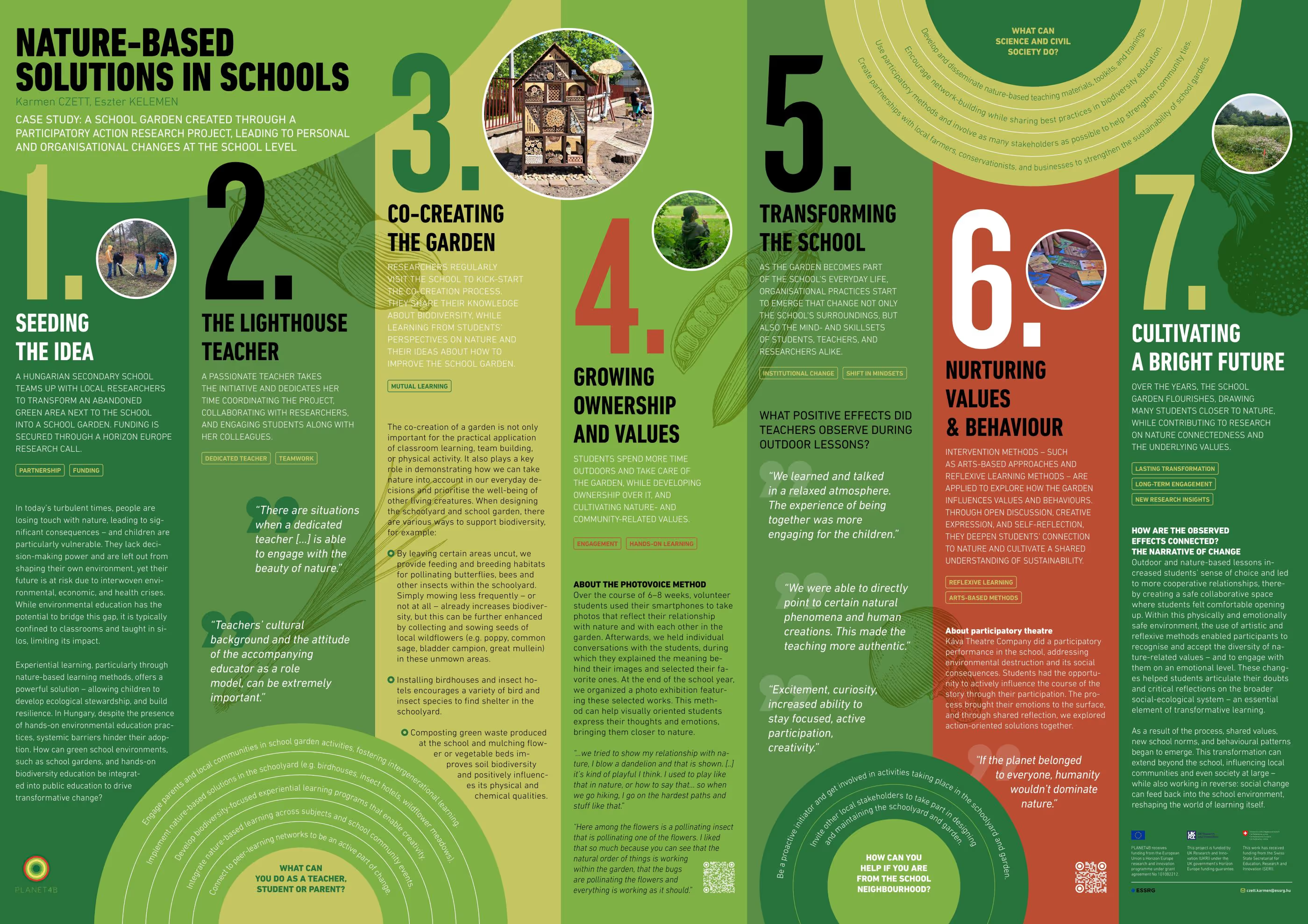
School gardening: why and how to get started?
This infographic tells the story of how an abandoned green area next to a school in Hungary was transformed, through collaboration between teachers, students, and researchers from ESSRG, into a vibrant school garden full of life and learning opportunities.
Are you interested in starting, growing, or maintaining a school garden in your local area? For free, step-by-step guidance and learning materials on school gardening, visit the Royal Horticultural Society’s section on School Gardening.
PLANET4B Biodiversity Engagement Activities
Most of the PLANET4B Biodiversity Engagement Activities can be used with primary school children – either on their own, or in combination with the lesson plans above:
PLANET4B Biodiversity Engagement Online Course for Educators
Although the online course was designed primarily for secondary and higher education, primary school teachers are very welcome to explore it. You can complete all or some of the modules, depending on your time and interest.
The course can support your own learning and connection with nature and biodiversity, and give you ideas for adapting activities for young learners.
Each module includes downloadable teaching notes and slides. Whilst these are written for older students, the secondary education versions may be suitable for upper primary classes, with light adaptation.
Further Resources
We also recommend the following external resources, which align well with the themes explored in the PLANET4B educational materials:
- Biodiversity teaching tools developed by WWF
- Education resources on fashion developed by Fashion Revolution
- Education resources on global food issues developed by Oxfam
We hope you and your students enjoy these lessons and activities and get inspired to learn about biodiversity and care for nature!