


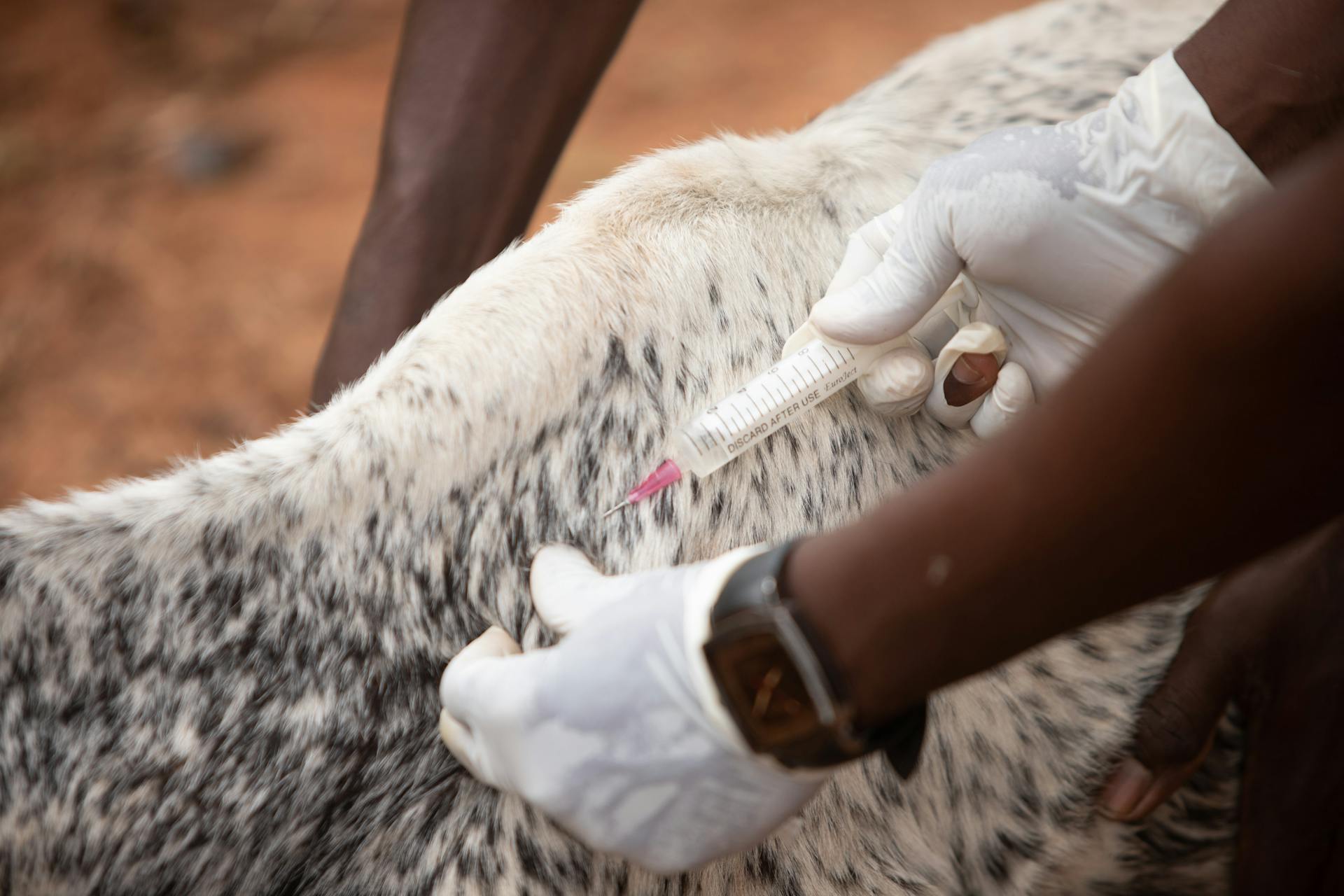
Rabies Vaccinations in Columbia
.svg)
This case innovation has been analysed using the Transformative Intervention Mixes (TIMs) framework. The framework maps the regulatory, economic, social‑behavioural, technological and material interventions at play, clarifying how these elements interact and what this configuration suggests about the innovation’s capacity to support transformative change.
Wildlife vaccinations
Rabies vaccinations in Colombia
One Health disease control; zoonoses prevention; public health, veterinary health and wildlife management
The case traces the history of rabies vaccination and control in Colombia across human, domestic animal, livestock and wildlife interfaces. It combines long-standing canine vaccination campaigns, vaccine production, diagnosis, bat-control measures, surveillance and recent calls for integrated One Health planning in response to fragmented governance, rural inequities, wildlife spillover and the growing importance of cats and bats in transmission pathways.
National scale with differentiated urban, rural and frontier dynamics, plus localised outbreaks in wildlife, livestock and Indigenous communities.
Practical: Vaccination campaigns, diagnosis, surveillance and outbreak response reduced canine-mediated transmission and sought to control spillover across species.
Political: Cross-sectoral coordination, public funding, decentralisation reforms and later fragmentation shaped the reach and coherence of the intervention.
Personal: Public health education, responsible pet ownership campaigns and risk communication influenced prevention behaviour and vaccine uptake.
High if a One Health model reconnects human, animal and wildlife programmes, strengthens rural access, and rebuilds integrated vaccine, surveillance and response capacity.
Summary
This case is strongly evidenced through regulatory, information and education, technology, infrastructure and knowledge tools, all operating within a One Health logic even when not always named as such historically. Market-based mechanisms are weak, appearing mainly through public financing and the resource implications of vaccine production and supply, while social-norm and emotional tools are present but secondary to institutional and technical measures. The case also shows that successful vaccination depended not simply on biological efficacy but on governance quality, coordination across sectors, and sustained reach into rural and Indigenous communities. This configuration implies a transformative pathway that is primarily institutional and systemic, linking disease control to state capacity, intersectoral cooperation and socially uneven access. An implementation-relevant lesson is that fragmentation after decentralisation weakened what had previously been a highly effective integrated programme.
Implications for Intervention Mix Design (analytical reflection): To enhance transformative scope, stronger alignment would be needed between vaccination campaigns, wildlife surveillance, cold-chain reliability, community-centred engagement and longer-term legal and planning frameworks under One Health governance. Additional social-norm and participatory tools could help improve uptake and legitimacy in remote or marginalised settings without relying solely on top-down public health delivery.
| Tool Category | Examples | How it ENABLES (mechanisms) | How it HINDERS (barriers) | Opportunities to strengthen | Risks / caveats | Additional suggestions and resources |
|---|---|---|---|---|---|---|
| Regulatory | National vaccination and surveillance programmes; integrated rabies surveillance protocol; ICA Resolution 4003 for livestock vaccination cycles; public health laws that shaped decentralisation. | These instruments organise vaccination periods, responsibilities and disease control procedures, giving formal authority to surveillance and intervention. | Decentralisation fragmented responsibilities, generated uneven implementation and weakened coordination between human and animal health programmes. | Stronger cross-sector legal alignment under a One Health strategic plan could reduce fragmentation and improve coherence. | Regulatory proliferation without implementation capacity may deepen unevenness rather than solve it. | Integrated zoonoses governance; national surveillance protocols; statutory vaccination programmes. |
| Financial / Market-Based | Public funding for vaccine production and campaigns; later import dependence after closure of public laboratories. | Funding enabled domestic vaccine manufacture, large-scale campaigns and diagnostic capacity when institutions were adequately supported. | Laboratory closures created dependence on imported vaccines and weakened cost-effective national disease control capacity. | Stable long-term financing for vaccine production, cold chains and rural delivery would strengthen programme resilience. | Financial shortfalls can quickly erode public-health infrastructure and widen territorial inequalities. | Public vaccine manufacturing; sustained outbreak financing; health system investment. |
| Information / Education | Health education campaigns on transmission, prevention and responsible pet ownership; community outreach during campaigns; targeted rural promotion. | Education helps communities recognise risk, seek prophylaxis, vaccinate animals and support outbreak control. | Remote communities face communication barriers linked to geography, language, culture and infrastructure. | Locally adapted communication with community leaders and traditional healers would improve reach and trust. | Generic messaging may fail in settings where transmission pathways and cultural practices differ sharply from urban assumptions. | Responsible pet ownership campaigns; community health promotion; multilingual risk communication. |
| Choice Architecture | Shortened post-exposure prophylaxis schedules and adapted dosing strategies for remote communities. | These measures simplify response in hard-to-reach settings and make protective action more feasible where standard delivery is difficult. | The sources provide limited evidence that wider behavioural design of decision environments was used systematically beyond treatment logistics. | User-centred vaccination access design, mobile delivery and simplified referral pathways could strengthen uptake. | Over-simplified delivery changes may weaken confidence if communities do not understand why protocols differ. | Mobile vaccination outreach; simplified care pathways; access-oriented service design. |
| Social Norms | Volunteer search teams in Cali; campaigns around responsible pet ownership; multi-stakeholder mobilisation during major anti-rabies drives. | These mechanisms normalised participation in dog vaccination and collective responsibility for rabies prevention. | Evidence of norm-based approaches is present but uneven, and later fragmentation reduced their consistency across the country. | Community-centred norms around vaccination and reporting could be strengthened in rural and frontier settings. | Normative pressure without access to services may produce frustration rather than uptake. | Community surveillance volunteers; peer education; neighbourhood vaccination mobilisation. |
| Emotional Appeal | High public concern about bites, human deaths, outbreak risk and livestock loss; visible risk to children and rural communities. | Fear of disease and concern for family, animals and livelihoods helped justify mass campaigns and outbreak response. | Fear-based responses can also encourage inhumane or socially divisive control preferences, especially around wildlife. | Risk communication that combines urgency with practical guidance would be more constructive than fear alone. | Emotional responses may support culling or blame if not balanced with evidence and community dialogue. | Protective health messaging; livelihood-risk communication; child-focused prevention campaigns. |
| Technology | Human and animal vaccines; laboratory diagnosis; Vero-cell vaccine production; oral vaccination research for wildlife; genotyping and surveillance tools. | These technologies underpin prevention, diagnosis and response across domestic and wildlife transmission pathways. | Cold-chain failures, supply constraints and uneven access reduce the effectiveness of otherwise strong technical tools. | Investment in storage, delivery and wildlife-appropriate vaccination technologies could extend protection in hard-to-reach areas. | Technical solutions can fail if governance and logistics remain weak. | Vaccine production systems; wildlife oral vaccination; laboratory surveillance. |
| Infrastructure (Hard/Soft) | National Institute of Health laboratories; Vecol and ICA institutional roles; surveillance systems; cross-sector coordination platforms. | Institutional and physical infrastructure enabled vaccine production, diagnostics, campaign delivery and coordination when adequately resourced. | Closure of public laboratories and fragmented service delivery weakened continuity, especially in rural areas. | Rebuilding integrated laboratory and surveillance infrastructure would strengthen programme autonomy and response capacity. | Infrastructure recovery is costly and can be undermined by political turnover. | Public health laboratories; veterinary diagnostics; integrated One Health coordination platforms. |
| Biophysical Resources | Domestic dogs and cats, cattle, foxes and vampire bats as interacting hosts and vectors; frontier ecosystems and livestock expansion shaping transmission risk. | The intervention directly addresses pathogen circulation across human, domestic and wild animal populations. | Ecological change, habitat disturbance and transhumance can maintain or shift transmission pathways beyond the reach of canine vaccination alone. | Closer integration of vaccination with ecological surveillance and context-specific wildlife management would strengthen prevention. | Poorly designed wildlife control can disrupt ecosystems and worsen disease spread. | One Health wildlife surveillance; ecosystem-based zoonoses control; livestock-wildlife interface management. |
| Knowledge | Historical surveillance, laboratory diagnosis, genotyping, outbreak investigation and later One Health analysis of institutional strengths and weaknesses. | Knowledge generation identified changing transmission routes, including the importance of cats and bats, and informed programme redesign. | Fragmented information systems and poor coordination limited the translation of knowledge into integrated control. | Shared data systems across human, animal and wildlife sectors would improve timely response and planning. | Knowledge can remain siloed if institutions are not designed to use it collectively. | Integrated disease intelligence; cross-sector data systems; outbreak analysis. |
| Other | One Health as an organising framework linking ministries, academia, NGOs and communities. | This provides the overarching logic for integrating vaccination, surveillance, equity and ecosystem considerations across sectors. | The framework remains constrained by bureaucracy, leadership change and uneven institutional commitment. | Operationalising One Health through the National Zoonoses Council and a strategic action plan could improve durability. | Framework language may outpace implementation if not matched by resources and authority. | National zoonoses councils; cross-sector strategic planning; community-inclusive governance. |
Note: Blank cells reflect that the documentary evidence available for this case did not contain sufficiently explicit information to address these dimensions. This absence should not be interpreted as implying that such mechanisms were irrelevant or ineffective, but simply that they were not documented within the scope of the source materials.